|
Race Against Global Warming
One of the biggest stress factors for race organisers is the uncertainty of the weather on race day. We pore over long-range forecasts, trying to predict what conditions athletes and crews will face – and the variations can be dramatic.
At one event I was involved with for many years, we experienced everything from blistering 40-degree heat to minus-five degrees with icy rain. It’s a reminder that no matter how much planning goes into a race, the weather is always an uncontrollable factor that can have the final say.
Add global warming into this equation and things really start to get complex. Endurance events are already incredibly physically and mentally demanding for athletes. Expecting competitors to perform in blistering temperatures intensifies the challenge significantly, not only from a performance perspective, but also in terms of health and safety.
According to CNN Sports, a new study claims that rising global temperatures will make it harder for elite athletes to break marathon world records, or for recreational runners to achieve their personal bests.
The report, released by Climate Central, analysed 221 races worldwide and found that 86% are projected to be less likely to offer ideal racing conditions by 2045. This includes many of the world’s most prestigious marathons, underscoring how climate change is set to reshape the endurance sport landscape in the decades ahead.
As heat levels climb, optimal racing windows become narrower, and the physiological strain on athletes increases.
Scottish distance runner, Mhairi Maclennan says: “We’ve seen time and time again where athletes are passing out from dehydration and heat exhaustion during races and taking months to recover. It has really had a significant impact on the thickness of your blood, on how quickly your body is able to recover, on your hydration levels for days, and also your ability to train after that kind of experience, which can then delay other achievements and goals that you’re pursuing.”
So what steps can race directors take to future-proof their events against the impacts of global warming?
1. Rethink Race Timing and Scheduling
• Move start times earlier (even pre-dawn if necessary) to avoid peak heat
• Try if possible to shift race dates to cooler months
• Build flexibility into permits and supplier contracts to allow for weather-driven adjustments
2. Strengthen Heat Safety Protocols
• Develop a clear heat policy with defined thresholds for modified starts, shortened routes, or cancellation
• Increase on-course medical support trained specifically in heat-stroke symptoms and rapid cooling procedures
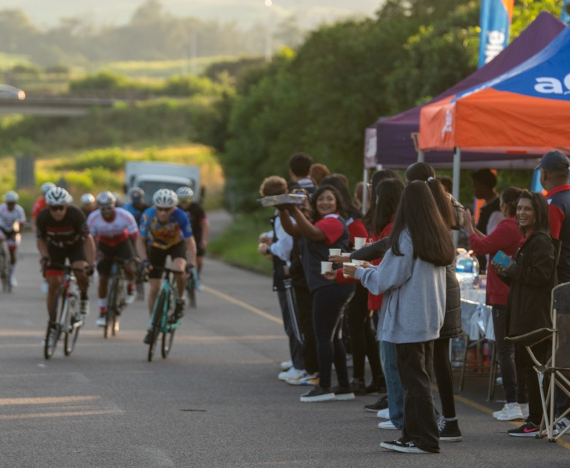
• Establish visible and well-communicated cooling stations with shade tents, misting sprays and ice baths
3. Increase Hydration & Cooling Infrastructure
• Add more frequent water points
• Provide electrolyte options
• Use shaded sections, temporary structures, or tree-lined route planning where possible
• Allow athletes to carry hydration packs if traditionally restricted
4. Improve Athlete Communication
• Send out emails educating athletes on how to avoid heat stroke during the event
• Provide pacing advice for hot conditions
• Encourage heat acclimatisation strategies
• Make withdrawal policies flexible so runners don’t feel pressured to start in unsafe conditions
5. Scenario Planning & Insurance
• Update risk assessments to reflect climate trends, not just historical averages
• Review event insurance to ensure coverage for extreme weather disruptions
• Create contingency plans for smoke, storms, flooding, or heatwaves
6. Reduce your Events Carbon Footprint
Future-proofing also means helping slow the problem:
• Incentivise public transport and carpooling
• Reduce single-use plastics at water tables
• Partner with sustainability organisations
• Offset unavoidable emissions responsibly
Endurance sport has always been about resilience. But as global temperatures rise, race directors must evolve from being reactive to proactive. The events that will thrive in the coming decades will be those that prioritise athlete welfare, embrace flexibility, and integrate climate awareness into every layer of planning.
What do you need help with as an event organiser? If there is an area of organising you would like to know more about, send a mail to tim@finishtime.co.za and we will see if we can find some info for you.
|