FINISH TIME NEWSLETTER
Missing out on awesome stuff? View this email in your browser
 

Dear Event Organiser

July has been a bumper month for sport. Wimbledon, the Tour de France, Springbok rugby and the FIFA World Cup have all provided the perfect psychological lift to help us through the coldest month of the year.

Our main feature examines whether growing competitor numbers in response to rising demand is always the best solution for a race, and in our FinishTime article we introduce FinishMedia, a specialist sports and event marketing company that helps events connect with their audiences.

In “The Good, The Bad and The Ugly” we discuss a race that is easy to organise and goes viral on social media every year – but does have one big obstacle for South African race organisers.

If you have any topics you would like us to cover or if you would like to contribute to “The Good, The Bad and The Ugly” feature, please don’t hesitate to contact tim@finishtime.co.za.

Hope you enjoy it!


Bigger Isn't Always Better


There's no denying it – running is booming. From local parkruns to major marathons, participation is soaring, race entries are selling out in record time, and running clubs are attracting new members. While the pandemic undoubtedly reignited interest in the sport, its soaring popularity can largely be attributed to Gen Z, who are rediscovering running as both a fitness activity and a social experience.

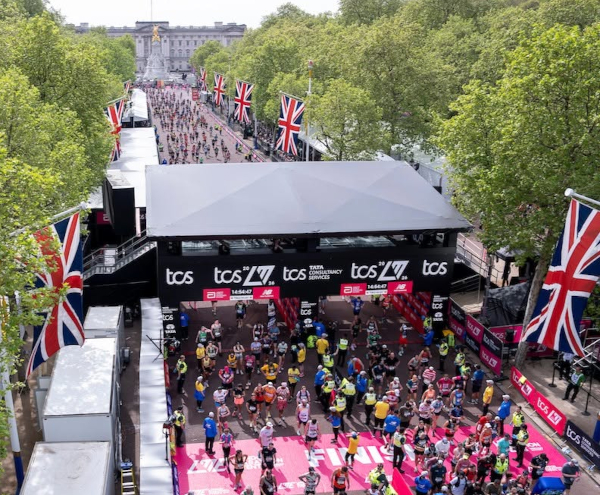
As demand continues to grow, race organisers have responded by increasing field sizes and expanding their events. In 2027 the TCS London Marathon will be a two-day event for the first time in its history, allowing a record 100 000 participants to take part. Additional start waves helped the Boston Marathon accommodate 29 033 finishers this year, marking its largest number of finishers since 2014. The 2027 Tokyo marathon will accept 40 000 runners, up from 39 000 in previous editions. Locally the ever popular Two Oceans Marathon recently announced that, from 2027, both its Half Marathon and 56km Ultra Marathon will expand to fields of 21 000 runners each, up from the current limits of 17 000 and 14 000 respectively.

Not every race has chosen to grow however. Despite unprecedented demand that saw entries for the 2026 Comrades Marathon sell out in less than 10 hours, the Comrades Marathon Association reduced the race's entry cap from 24 000 in 2025 to 22 000 in 2026 rather than following the trend towards bigger fields, citing runner safety, operational requirements and the need to preserve the participant experience.

There are strong arguments for both sides.

As participation grows, expanding capacity can:

Meet demand: Popular races often sell out quickly, leaving many runners disappointed.

Generate more revenue: More entries can help fund better infrastructure, prize money, and community initiatives.

Grow the sport: Allowing more people to participate can encourage new runners and strengthen the running community.

Benefit local economies: More runners usually mean more visitors spending money on accommodation, restaurants, and local businesses.

Financial benefits: Bigger fields can mean economies of scale for infrastructure and allow for bulk discounts from suppliers.

However a larger field can also create challenges:

Congestion: Crowded starts and narrow sections can make the race less enjoyable and affect finishing times.

Safety risks: Medical services, hydration stations, toilets, transport, and crowd management all need to scale with participant numbers.

Loss of atmosphere: Some races are popular because they offer a premium, well-organized experience. Growing too quickly can dilute that.

Environmental impact: More participants increase pressure on roads, trails, parks, and local communities.

Volunteer and operational strain: Recruiting enough marshals, aid station volunteers, and logistics staff becomes more difficult.

The decision to increase a race's field size is far more complex than it may appear. Race organisers must first consider a number of critical questions:

• Can our route safely accommodate more runners?

• Can we provide the same quality of experience?

• Can our transport, parking, baggage, and medical services cope?

• Will runners still want to come back next year?

• Will the character of the race and participant experience remain with a bigger field?

If the answer is yes, then increasing the field size can be a positive step. If not, maintaining quality may be the wiser choice.

To manage growth sustainably however, some race organisers have expanded in ways other than simply accommodating more runners in a single race by:

• Introducing wave or rolling starts.

• Adding a second race day or weekend festival.

• Offering additional distances (5km, 10km, half marathon, etc.).

• Using a ballot system to manage demand.

• Rotating entry opportunities for first-time participants and returning runners.

The running boom presents an incredible opportunity for race organisers, but bigger doesn't automatically mean better. The challenge is to grow in a way that enhances, rather than compromises, the participant experience. Ultimately, the races that will stand the test of time are those that strike the right balance between increasing capacity and maintaining the quality that made them popular in the first place.


What do you need help with as an event organiser? If there is an area of organising you would like to know more about, send a mail to tim@finishtime.co.za and we will see if we can find some info for you.


Words To Live By ...


“Events are not just gatherings,


they’re stories waiting to be told." 


Unknown


FinishMedia: For Sports and Event Marketing  


We're excited to introduce FinishMedia, a company the specialises in sports and event marketing by blending creativity with strategy to create powerful brands, engaging content and digital campaigns that leave a lasting impression.

FinishMedia believes the best moments are those that bring people together. Their mission is to help event organisers and brands turn memorable moments into compelling stories that engage, inspire and connect with their audiences.

They don't believe in one-size-fits-all marketing strategies. They take the time to understand your vision, build genuine relationships, and create work that reflects the passion behind your event or brand. Whether you're launching a new event, growing an established race or elevating your brand, they become an extension of your team, delivering creative solutions tailored to your goals.

Their services include expanding your reach through digital marketing and advertising, building a professional and memorable brand presence, and capturing the moments that matter through professional photography and videography.

FinishMedia is your complete sports and event marketing partner.

For more information about their services:
Website: https://www.finishmedia.co.za/about
Email: Hello@finishmedia.co.za
Tel: 073 088 8234


One for Greg Minnaar Wannabes


Think downhill mountain biking is extreme? This event takes it to another level – like downhill on steroids extreme! Yet, it's surprisingly easy to organise... all you need is a glacier – which, of course, in South Africa is no easy ask.

Started in 1999, the Mountain of Hell MTB event takes place in Les Deux Alpes, France.

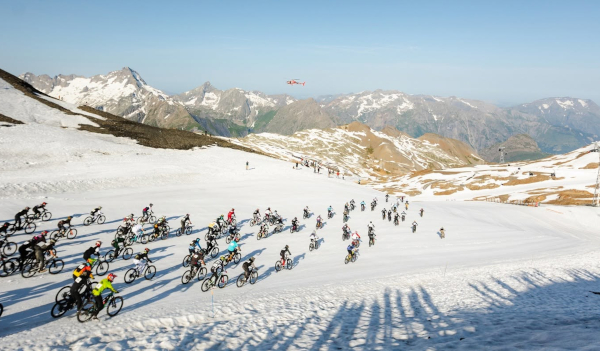
The format is refreshingly simple. More than 1 000 riders, representing around 27 countries, line up at approximately 11 000 feet on the Glacier des Deux Alpes before launching themselves downhill in a race where gravity does most of the work. During the 25-kilometre plunge, riders drop approximately 2 400 vertical metres while tackling a constantly changing mix of snow, ice, bike park trails, loose rocks and technical terrain.

According to Canadian MTB, the start however is the main event. It is a mass start with 1 000 riders who, when the horn goes, drop in and for the first few kilometres are riding down ski runs, fighting through powdery snow and thick, slippery mud. The result is some of the most spectacular cycling footage you'll find online, with riders battling to stay upright as crashes unfold throughout the descent. So it comes as no surprise that the start of Mountain of Hell goes viral every year.

Besides the general chaos, it is in fact a race with France’s Kimi Viardot taking the win in 2026 in a time of 24:09.75, narrowly beating fellow Frenchman Damien Oton by just over 12 seconds – that's an average speed of over 60km/h. France’s Emilie Fer won the women’s division in 32:37.76. Her compatriot, Emilie Serre, finished three-and-a-half minutes later.

So, if you're looking for an event that's easy to organise and guaranteed to go viral on social media, look no further… all you have to do is find a glacier!


Do you have an unusual, wild, whacky or funny story about event organising? If so, send it to tim@finishtime.co.za (max 300 words please).

Unsubscribe: If you would no longer like to receive these communications then please click here and you will stop receiving this newsletter from FinishTime.

Contact Us
Website: finishtime.co.za
E-mail: Support@FinishTime.co.za
Telephone: 087 330 0001
Postal Address: 10 Park Lane, Kloof, 3610

Confidentiality Notice
This communication, its content and any file attachments transmitted with it are intended solely for the addressee(s) and may contain confidential propriety information. Access by any other party without the express written permission of the sender is unauthorised. If you have received this communication in error you may not copy, distribute or use the contents, attachments or information in any way. Please destroy it and contact the sender.