FINISH TIME NEWSLETTER
Missing out on awesome stuff? View this email in your browser
 

Dear Event Organiser

As the year “Marches” on, the race calendar is in full swing with the Two Oceans just weeks away and the Cape Town Marathon and Comrades fast approaching.

Our main feature this month explores how women-focused events are meeting a real and growing demand among female runners and discover how a major charity event in the UK was timed remotely from a small corner of South Africa.

In “The Good, The Bad and The Ugly” we take you inside the chaotic world of a Wife Carrying race.

If you have any topics you would like us to cover or if you would like to contribute to “The Good, The Bad and The Ugly” feature, please don’t hesitate to contact tim@finishtime.co.za.

Hope you enjoy it!


It's a Women's World?


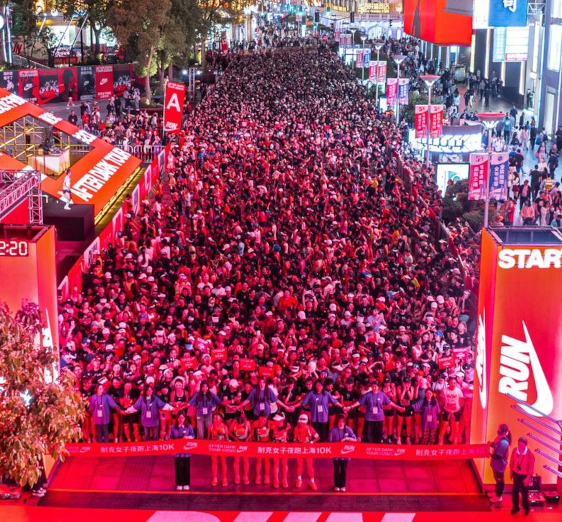
In September 2020, a social media post went viral asking women: “What would you do if all men disappeared for 24 hours?” The overwhelming response: Walk or run freely at night. While this might seem surprising, the popularity of Nike’s After Dark Tour confirms that many women actively seek this sense of freedom and safety after dark.

Nike’s After Dark Tour, launched in 2025, saw 50 000 women take part in a women-focused running series in seven major cities around the world. It was created to bring female runners together, and give them a space to run, especially at night, in a way that felt safe, supportive, and empowering.

So what made the series such a success?

Firstly, it tapped into a real issue that many women don’t feel safe running at night. It allowed them to run through these cities and experience them after dark - a huge novelty for most women. Each city was given its own flavour from the course and pre-race activities to the post-run celebrations based around the city they were in. Running through central London after dark feels completely different to racing through Mumbai or Mexico City.

Secondly, it concentrated on more manageable distances – 10km and half marathons. In 2025, one in three of the 50 000 participants had never raced before. According to Marathon Handbook, Nike has long pushed the line, “If you have a body, you are an athlete.” This encouraged novices to take the plunge.

Thirdly, the series was purpose-built for women with everything from the vibe to the logistics designed around that experience. It was positioned as more than just a race but rather closer to a “running festival” or “girls’ weekend” experience. Nearly half of last year’s participants said the women-focused format was the specific reason they registered. Not the city. Not the distance. The fact that it was built for them.

Finally, it also coincided with a genuine boom in women’s running. Female participation in road races has been rising steadily for years, and brands are scrambling to keep pace with the growing demand.

After a hugely successful 2025 edition, Nike’s After Dark Tour is returning this year, once again spanning seven global cities: Shanghai, Sydney, Mexico City, London, Los Angeles, Manila and Mumbai.

In South Africa there is the success of the Spar Ladies Race. It was started over 30 years ago as a simple run to bring women of all ages, shapes and fitness together. It has grown into one of the biggest series in South Africa, rivalling even the Comrades and Two Oceans Marathons. They have kept to the 5 and 10 km manageable distance and as the event's popularity has grown, rolled it out to multiple cities across the country. Some of the events are sold out long before race day.

In a male-orientated world, these woman-focused events create a dedicated space where woman can run, compete and celebrate together. They unite women of all ages, backgrounds and abilities, creating a supportive environment that champions participation and achievement as much as competition. The sustained growth and enthusiastic turnout to these women’s races shows that they are deeply valued by women and are meeting a real and growing demand among female runners.


What do you need help with as an event organiser? If there is an area of organising you would like to know more about, send a mail to tim@finishtime.co.za and we will see if we can find some info for you.


Words To Live By ...


“Plans are nothing. Planning is everything."
 

–Dwight D. Eisenhower


Massive UK Event Timed from South Africa


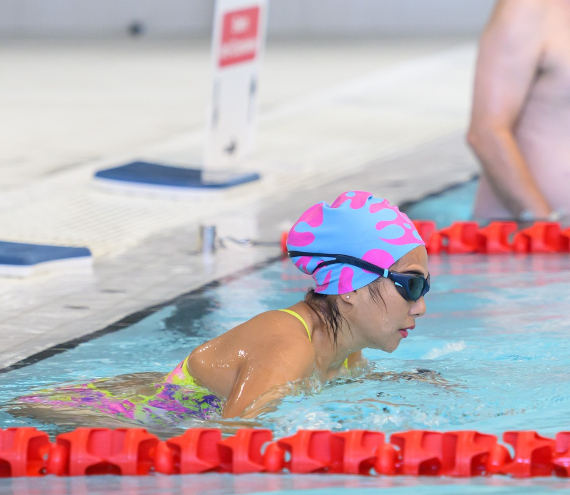
6700 swimmers spread over 300 pools taking part in a three-day charity event in the UK – all timed from the Eastern Cape.

That was the scenario when the UK Swimathon was held in March. This massive charity event is hosted at 300 different pools spread across the UK with about 6700 registered swimmers taking part. The logistics of timing such a large, complex event cannot be understated. This year, believe it or not, it was timed remotely from a small corner of South Africa using Racetec Toolkit.

Racetec Toolkit, administered by FinishTime in South Africa, an amazing piece of timing equipment run off smartphones and mobile devices, was used by one of our partners in Port Elizabeth to remotely time the event. The race officials at each pool manually punched race numbers into Toolkit as competitors finished. Toolkit then collated all the data over three days and ensured each competitor ended with a FinishTime.


The Chaotic World of Wife Carrying 


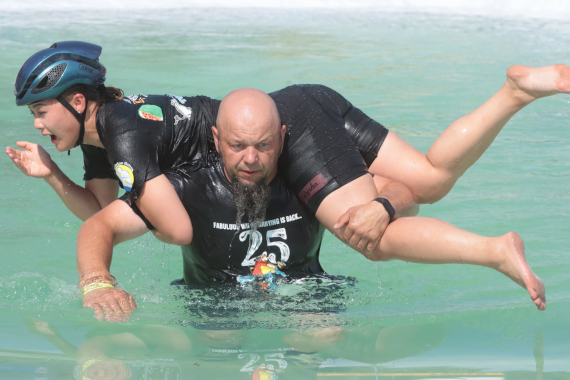
In Dorking, Surrey on the first Sunday of March this year, dozens of people braved the murky weather to take part in one of the UK’s wackiest races, the Wife Carrying Race.

According to BBC, it is the 17th edition of the race with winners qualifying for the Wife Carrying World Championships in Finland in July. Originating in the Nordic region, the race requires contestants to carry their wives, husbands, partners, friends or family members along a 380m “out-and-back” course featuring hills, hay bales and a “splash zone”. Spectators are encouraged to attend with their own water-pistols and buckets of water to “staff” the Splash Zone.

"It's certainly chaotic," said Ian Giles, the UK race director, ahead of the contest but with any good sport, there are strict rules to ensure a level playing field. Participants being carried are weighed before the event and must weigh at least 50 kg. Those who fall short are required to wear a rucksack “filled with flour, water, or similar items” to reach the minimum weight.

According to the organisers: “You can use any one of the many recognised holds - bridal carry, piggy-back, shoulder-ride, fireman's carry (across the shoulders), the well-recognised and very fast Estonian Hold (wife hangs upside-down on man's back, legs crossed in front of the man's face) or the not-so-fast but unique Dorking Hold (the reverse Estonian).”

This year the two-time UK champions, Stuart Johnson and Hattie Cronin, whose favoured method is the Estonian Hold, were defeated by Finns, Teemu and Jatta who were crowned the 2026 champions, winning a barrel of local ale and qualifying for the Wife Carrying World Championships in Finland in July.


Do you have an unusual, wild, whacky or funny story about event organising? If so, send it to tim@finishtime.co.za (max 300 words please).

Unsubscribe: If you would no longer like to receive these communications then please click here and you will stop receiving this newsletter from FinishTime.

Contact Us
Website: finishtime.co.za
E-mail: Support@FinishTime.co.za
Telephone: 087 330 0001
Postal Address: 10 Park Lane, Kloof, 3610

Confidentiality Notice
This communication, its content and any file attachments transmitted with it are intended solely for the addressee(s) and may contain confidential propriety information. Access by any other party without the express written permission of the sender is unauthorised. If you have received this communication in error you may not copy, distribute or use the contents, attachments or information in any way. Please destroy it and contact the sender.