FINISH TIME NEWSLETTER
Missing out on awesome stuff? View this email in your browser
 

Dear Event Organiser

Welcome to 2026! The year is already steaming ahead, with January nearly behind us and the festive break a fading memory.

Most race organisers are busy planning the best way forward for their upcoming events so hopefully our main article on the trends that will shape races in 2026 will be helpful.

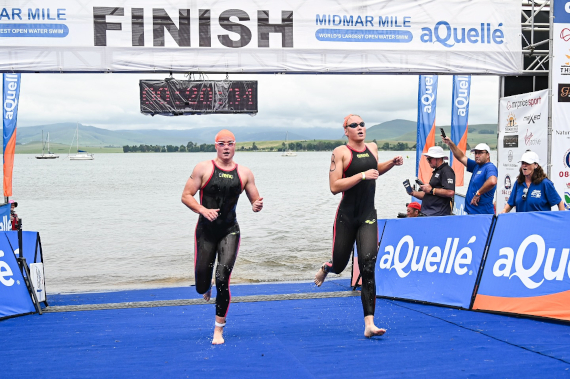
The aQuellé Midmar Mile is in February and FinishTime is once again timing the world's largest open-water swimming event, but this year with an exciting, new feature for the elite swimmers.

In “The Good, The Bad and The Ugly” we speak about an event that has created a unique finisher medal “with a ring to it” that is proving very popular among athletes.

FinishTime wishes all of you a year full of new opportunities, growth, and continued success. If you have any topics you would like us to cover or if you would like to contribute to “The Good, The Bad and The Ugly” feature, please don’t hesitate to contact tim@finishtime.co.za.

Hope you enjoy it!


Trends That Will Shape Races in 2026


Across the globe, race organisers are preparing for a packed and exciting 2026. For most organisers the festive season provided a short lull in the race calendar, but now that the year is in full swing, plans need to be made for the months ahead. For race directors, one key question is: “What will make 2026 different, and what do I need to do to keep my event relevant and successful?”

Connor Davies, author of The Race Brief newsletter, believes there are already signs pointing to trends that will shape global mass-participation events this year.

1. The emergence of races as brands in their own right

The strongest races are building clear identities, with "brand" emerging as a key differentiator in an increasingly competitive market. This is reflected in their tone, social presence, brand assets, merchandise and values. Races like Comrades, Two Oceans, the Cape Town Cycle Tour, Ironman and the Midmar Mile have elevated their status through a clear defined race brand. Against the backdrop of an increasingly crowded race calendar, where events compete both locally and internationally with thousands of mass-participation offerings, strong branding and clear positioning will be critical to success in 2026.

2. AI makes its mark

Numerous platforms are now using AI to help race directors support thousands of participants through chat bots and support tools. In an industry that typically has small race teams, this has the potential to be a game-changer, enabling organisers to service more participants, save time, and ultimately grow revenue.

3. Sell outs become the norm (for some) so more ballots expected

In the past sell-outs were the exception and race directors were envious of events like the ABSA Cape Epic and the Sani Stagger half marathon, that sold out within a few hours. Last year more events, particularly road running events, sold out and in 2026 this trend is expected to become the norm. As more races become over-subscribed, race directors will start moving to ballot systems to deal with the high demand.

4. Sponsors & brands focus on integration and authenticity

Traditional brand awareness will not be enough for sponsors in 2026. Brands will want access to participants so they can genuinely connect with their audience in the moments that matter: during their training, over race weekend, on the course, and at post-race celebrations and medal moments. Authenticity, relationships and creativity will be key so sponsors can build a relationship with their market base.

5. The rise and expansion of the race weekend...

In recent years, races have evolved beyond a single-day event, extending their impact into full weekends of activities. Many flagship events, like the London or New York marathons, have activities that include shake-out runs, panel talks, merch drops, film screenings, meet and greets and more. In 2026, expect this trend to filter down from the big flagship races to other smaller events.

6.'Racecations' and the internationalisation of endurance culture

In 2025, race travel received a lot of media attention because of an emerging culture of participants that were looking further afield for their next race experience. For many athletes, the local races have been ticked off and so they are travelling to destination events around the world. Airlines and travel companies are building strategies to take advantage of this trend, sponsoring races, highlighting destinations and targeting younger demographics. This global trend is not going to dissipate in 2026 so events of all sizes should take advantage.

In general, worldwide the industry is in a strong position, with demand and cultural relevance at all-time highs. While the trends above may highlight the larger races, there is ample opportunity for events of all sizes. Those that succeed in securing their spot on both the domestic and global calendar, will effectively future-proof their event.


What do you need help with as an event organiser? If there is an area of organising you would like to know more about, send a mail to tim@finishtime.co.za and we will see if we can find some info for you.


Words To Live By ...


“Event management is a delicate balance of creativity, organisation, and attention to detail.”

–Unknown


Making Every Second Count at the Midmar Mile


The aQuellé Midmar Mile is the world’s largest open-water swim event, attracting up to 19 000 participants. Spread across four days and multiple races, the event sees elite World Champions chasing seconds alongside thousands of swimmers simply aiming to finish – a scale and diversity that makes it one of the most complex events in the world for timekeepers.

FinishTime has been officially timing the aQuellé Midmar Mile since 2013, but their association with this remarkable event stretches as far back as 1992 when Craig Eldridge, one of the co-owners, worked as part of a team that produced the event’s first electronic results. In 2004, through a timing company Craig had established for a major retailer, he was once again officially responsible for the race timing.

Over the years, FinishTime has fine-tuned the timing process and developed a slick and reliable timing system. Each swimmer is provided with a timing chip and a barcoded tag with a safety pin. They also receive a swim cap corresponding to the colour of their start batch. The timing chip is secured on a Velcro strap around the left ankle, while the barcoded tag serves as a backup timing system and is pinned to the inside of the swimsuit.

Chip readers are set up to scan all swimmers as they enter the start pound, and again when they exit the water at the finish, ensuring everyone safely completes the crossing of the dam. Timing is live, so competitors’ results are available immediately as they cross the finish line.

This year, FinishTime is raising the bar for elite swimmers. Using active chips from our Australian partners, we will provide the top competitors with three split times across the dam. This not only adds excitement for spectators, but also gives the elite swimmers a detailed breakdown of their performance.

FinishTime is committed to delivering the latest in cutting-edge sports timing technology, and once again at the aQuellé Midmar Mile, we will be leading the way.


A Medal With a Ring To It


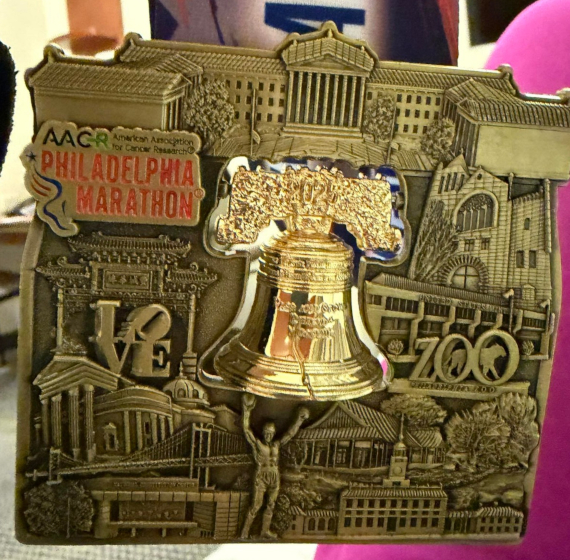
Athletes love their finisher medals, but creating one that truly stands out remains a challenge for race organisers. The Philadelphia Marathon has managed to get this right by weaving the city’s iconic symbols into its design, and creating one of the most distinctive finisher medals in the sport.

According to Canadian Running, this year’s medal featured several of Philadelphia’s most recognisable landmarks: the Rocky statue, the Philadelphia Museum of Art; and the LOVE sculpture. But these elements aren’t what made the medal unique – it’s the Liberty Bell, complete with a tiny clapper that actually rings.

For its 20th anniversary in 2013, the race set out to create a medal that reflected Philadelphia’s character. The Liberty Bell, the city’s enduring symbol of freedom and civic pride, was the natural choice. Its presence also ties directly to the marathon route, which winds past Independence Hall, where the bell resides.

The idea proved so popular with runners that the Liberty Bell has remained a feature ever since, appearing on the medals for all three Philadelphia Marathon Weekend races – the 8K, half-marathon, and marathon – every year since.

In recent years the race organisers decided to go one step further by making a 3D bell that actually rings, cementing their medals as one of the most creative and popular race medals across the country.

Leo Dignam, executive director said, “People loved the Liberty Bell. They loved the fact that it's a working bell, that you can actually ring it, even though it's a medal. To hear them excitedly say, 'Are you going to have the bell again?' really surprised us."


Do you have an unusual, wild, whacky or funny story about event organising? If so, send it to tim@finishtime.co.za (max 300 words please).

Unsubscribe: If you would no longer like to receive these communications then please click here and you will stop receiving this newsletter from FinishTime.

Contact Us
Website: finishtime.co.za
E-mail: Support@FinishTime.co.za
Telephone: 087 330 0001
Postal Address: 10 Park Lane, Kloof, 3610

Confidentiality Notice
This communication, its content and any file attachments transmitted with it are intended solely for the addressee(s) and may contain confidential propriety information. Access by any other party without the express written permission of the sender is unauthorised. If you have received this communication in error you may not copy, distribute or use the contents, attachments or information in any way. Please destroy it and contact the sender.